By Robert E. Allen Jr.
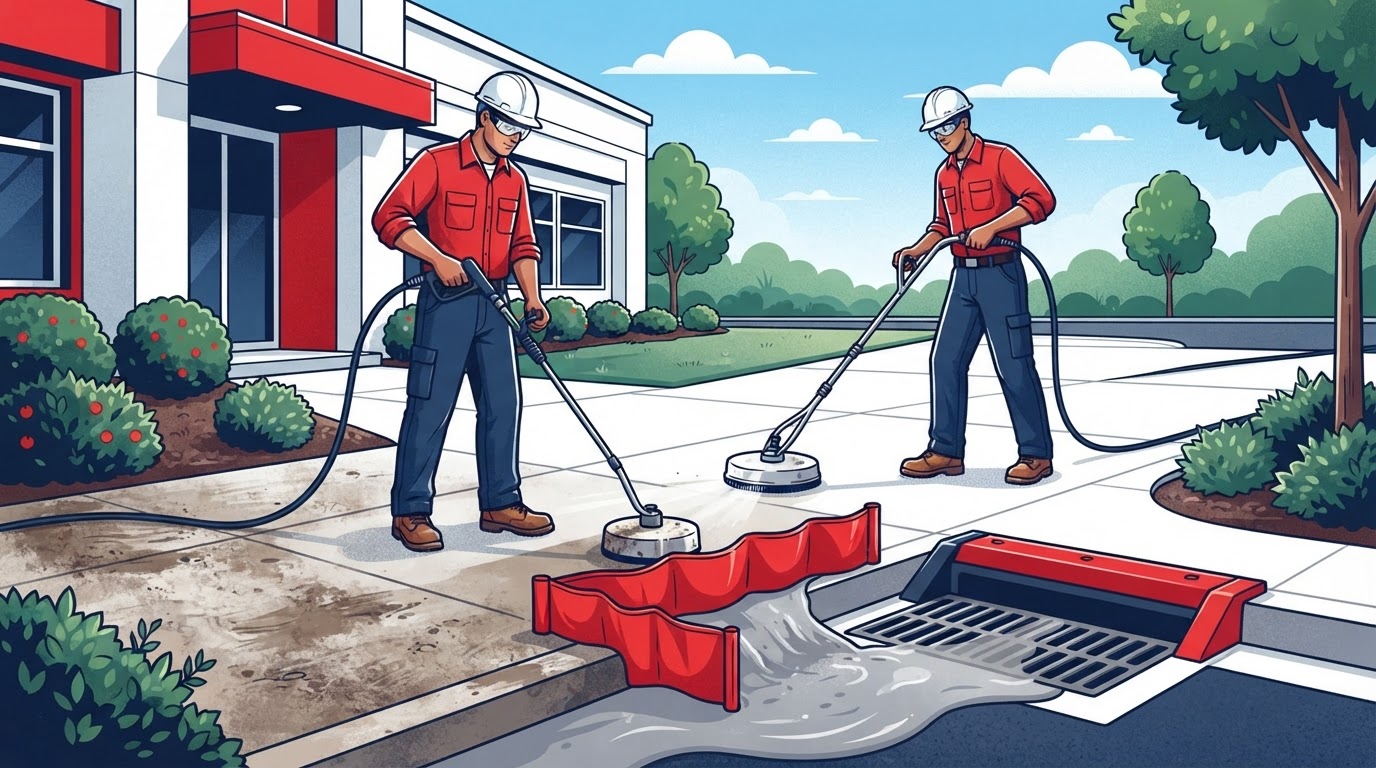
A cleaning plan should account for where the water goes after it leaves the surface. Dirt, oil, detergent, and other residue can travel with wash water, so take a minute to map the flow before starting.
Start with the drainage path
Look for nearby storm drains, curb openings, slopes, and low spots. Stormwater systems may carry runoff to local waterways, and EPA guidance identifies vehicle and equipment washing as an activity that can affect stormwater. The right controls depend on the surface, what is being cleaned, the products used, and local rules.
A practical pre-wash checklist
- Dry-clean first. Sweep up leaves, grit, and loose debris so less material gets carried away in the rinse.
- Identify the drain. Don’t assume a drain leads to a sanitary sewer; storm drains and sewer drains can be separate systems.
- Choose the wash method before setting up. If detergents, heat, oil, or other contaminants are involved, check applicable local requirements and plan for containment and proper disposal.
- Keep runoff on the property and controlled. Use appropriate barriers, absorbents, or collection equipment when needed. Don’t let wash water cross a sidewalk or run into a street drain.
- Check local guidance. Rules differ by city and site. For example, the City of Tulsa’s outside-washing BMP page calls for capture when chemicals or heated water are used and describes specific controls for its no-capture option. Those are Tulsa requirements; confirm the rules that apply at the actual job location.
Why “it looks clean” isn’t enough
Wash water can carry fine sediment or residues that are hard to see. EPA’s stormwater materials recommend pollution-prevention practices such as planning, inspection, and proper handling of pollutants. A clear runoff plan protects the property and helps keep the rinse from becoming someone else’s problem downstream.
The takeaway
Before you start, ask three questions: Where will the water flow? What could it pick up? What local rules apply? If those answers aren’t clear, pause and sort them out before washing.
United We Shine Wash Company is preparing for a full-service launch in Spring 2027, with online bookings coming soon. We’ll keep sharing useful, practical guidance as we get ready to serve Muskogee and nearby communities.
Sources
- City of Tulsa, Stormwater Quality: Best Management Practices, “Outside Washing” (accessed November 16, 2026).
- U.S. EPA, National Menu of Best Management Practices for Stormwater Pollution Prevention and Good Housekeeping (accessed November 16, 2026).
- U.S. EPA, Vehicle/Equipment Washing: Pollution Prevention/Good Housekeeping Practices (accessed November 16, 2026).
Leave a Reply