A clean, well-presented fleet makes a strong impression—but a good wash plan has to protect the vehicles, the crew, and the water around the work area. Here are practical points fleet managers and truck owners can consider before the next wash day.
Plan the wash area before the water starts
Truck and equipment wash water can pick up road grit, detergents, oils, grease, and metals from the vehicle and pavement. The U.S. EPA’s municipal vehicle and equipment washing guidance explains that these pollutants can affect stormwater when wash water is allowed to flow untreated into drains or nearby waterways. Before washing, locate storm drains and decide how the water will be contained, collected, or otherwise managed under local requirements. Don’t assume a curb or parking-lot drain is an approved place for wash water.
For a fleet operation, choose a suitable wash area, check where the ground slopes, and make sure hoses and recovery equipment won’t create trip hazards or block traffic. If you manage several vehicles, a simple written wash-day checklist can help crews follow the same setup each time.
Give each vehicle a quick walk-around
Before cleaning, look for loose trim, damaged decals, cracked lights, exposed wiring, or existing fluid leaks. Note anything that needs attention and follow the vehicle and equipment manufacturers’ instructions for cleaning. Different finishes, decals, cameras, seals, and components may call for different care. A pressure washer setting that works on one surface may be too aggressive for another, so use a controlled approach and test cautiously where appropriate.
Keep safety in the routine
High-pressure spray is powerful enough to cause serious injuries. The CDC’s pressure-washer safety guidance, updated August 26, 2026, warns that a spray wound may look minor at first and still need prompt medical attention. Keep the spray pointed away from people, secure the work area, and follow the washer’s owner manual and safety instructions.
If the washer uses a gasoline engine, operate it outdoors and at least 20 feet from doors, windows, and vents, as the CDC advises, to reduce carbon monoxide exposure. Never run a gasoline-powered washer inside a garage or other enclosed or partly enclosed space.
A practical fleet-wash checklist
- Choose a safe, level work area with room for vehicles, hoses, and crew movement.
- Locate nearby storm drains and plan wash-water management before starting.
- Check each vehicle for leaks or damage that could affect the cleaning plan.
- Follow the washer and vehicle manufacturers’ instructions for the surfaces and equipment being cleaned.
- Keep bystanders clear, wear appropriate protective equipment, and never point the spray at a person.
- Use a repeatable checklist so the team can prepare consistently across the fleet.
Looking ahead to Spring 2027
United We Shine is preparing to offer truck and fleet washing along with house siding and soft washing, roof care, window washing, concrete and driveway cleaning, and vehicle detailing. Our full-service launch is planned for Spring 2027, and online booking is coming soon. To leave a message or ask about a future estimate, visit our estimate and contact form.
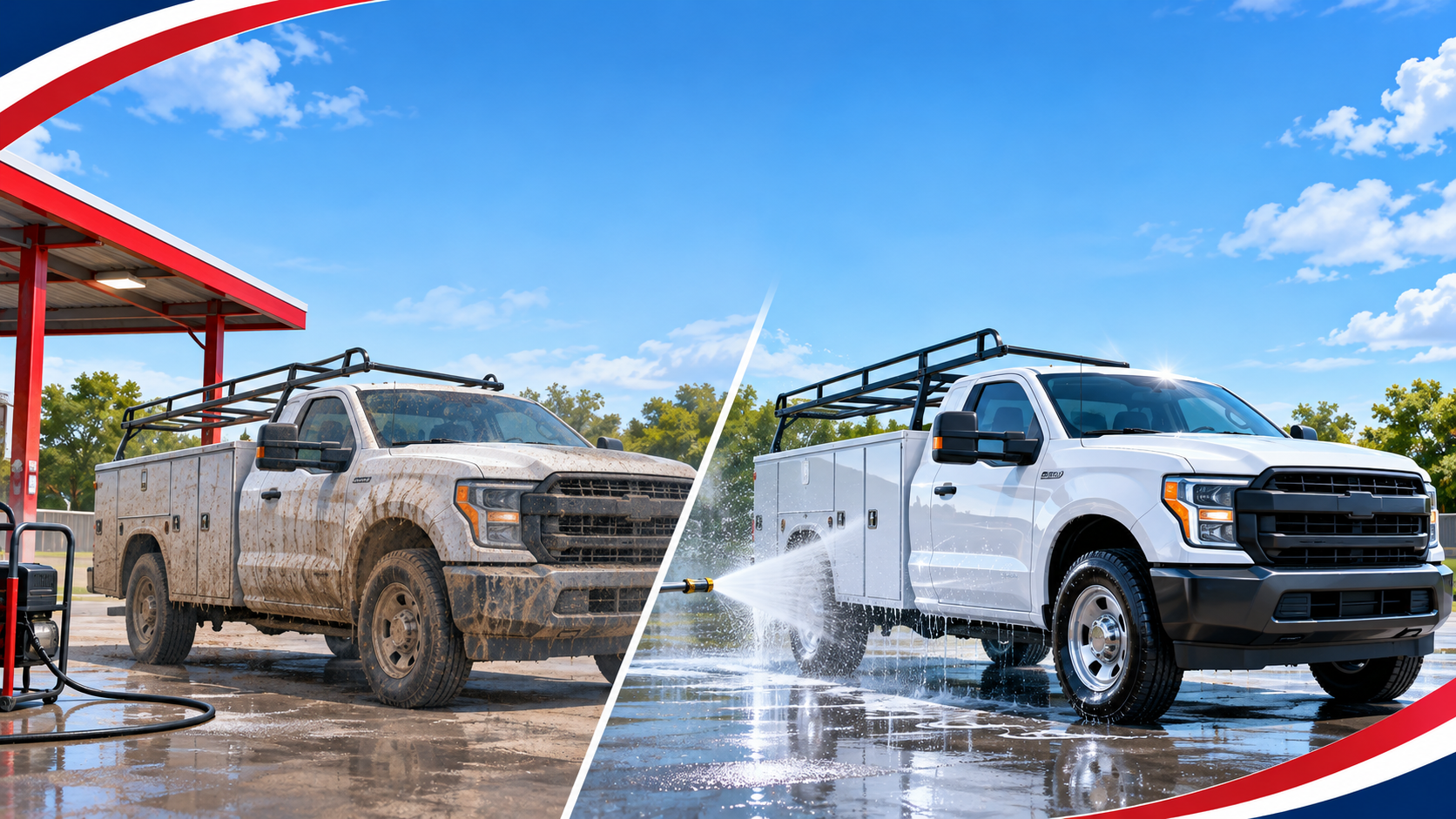
Illustrative image: the featured before-and-after-style truck graphic is an AI-generated concept, not a completed United We Shine customer job.
— Robert E. Allen Jr.
Sources
- U.S. Environmental Protection Agency, Stormwater Best Management Practice: Municipal Vehicle and Equipment Washing (November 2021).
- Centers for Disease Control and Prevention, Pressure Washer Safety (updated August 26, 2026).
Leave a Reply