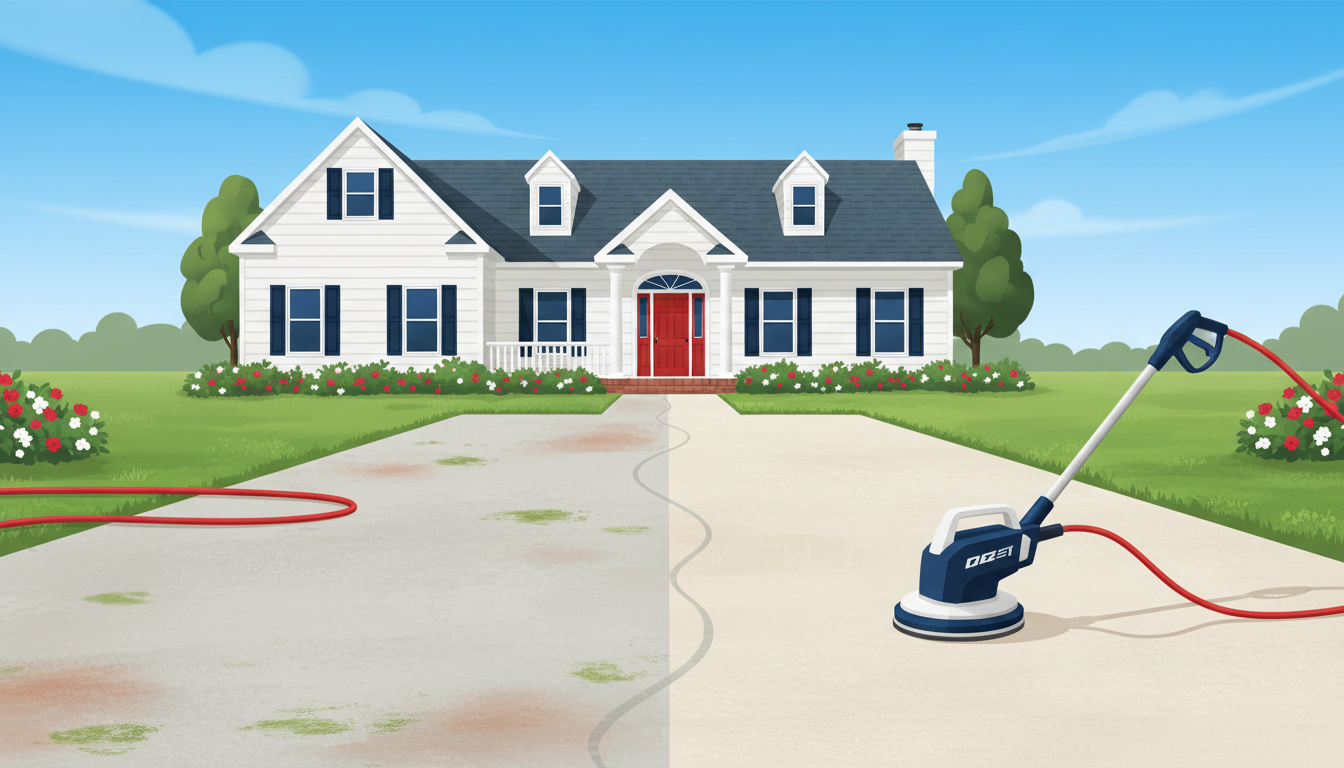
A clean driveway can make the whole front of a home feel more welcoming. Good results start before the washer is switched on: understand the surface, plan where the water will go, and use equipment carefully. Here’s a practical homeowner’s guide to getting ready for concrete cleaning as we prepare for United We Shine’s full-service launch in Spring 2027.
Start with a quick surface check
Concrete is durable, but not every driveway is in the same condition. Look for loose or crumbling areas, cracks, flaking, exposed aggregate, oil spots, and places where water already pools. Older repairs and decorative finishes may respond differently from sound, plain concrete. If you’re unsure how a surface will react, ask a qualified cleaning professional to assess it before work begins.
Plan the water’s path before cleaning
Driveway wash water can carry sediment and other residue. Before starting, identify nearby storm drains, street gutters, landscaped areas, and low spots. EPA’s Stormwater Best Management Practice for Municipal Vehicle and Equipment Washing (November 2021) recommends containing, treating, or reusing wash water in the settings it covers, and says operators should consider local requirements. It also advises against direct discharge of wash water to storm drains. Rules can vary by location and job, so check with the local sewer or stormwater authority when you’re unsure how runoff must be handled.
For a home project, a useful first step is simply to map the runoff path and keep wash water away from storm drains and neighboring property. Don’t assume a drain leads to a treatment plant; storm drains commonly carry water toward local waterways. If a project involves detergents, oily residue, or substantial runoff, get local guidance on containment and disposal before work starts.
Use a method suited to the surface
More pressure is not automatically better. A concentrated stream or an unsuitable setting can scar concrete, disturb joints, or leave uneven marks. Follow the pressure-washer and attachment manufacturers’ directions, use the appropriate nozzle and working distance, and test a small inconspicuous area first. A surface-cleaner attachment can help make passes more consistent when used as directed; keep a steady pace and avoid stopping in one place.
Start with a dry inspection and remove loose leaves, branches, and other debris by sweeping. This makes it easier to see the concrete and reduces material being pushed around by the water. If a stain needs additional treatment, use only a product labeled for the surface and follow its label, including any precautions for nearby plants, people, and pets. Never mix cleaning products.
Keep people and property out of the work zone
High-pressure water can injure people and damage property. Read the equipment manual, wear the protective equipment it calls for, inspect hoses and connections, and keep the spray away from people, pets, vehicles, windows, and fragile surfaces. Secure the area so nobody walks through while it’s wet. Work only when footing and weather are safe; cool temperatures can make wet concrete slippery and may create freezing hazards.
A driveway-cleaning prep list
- Inspect the concrete for cracks, loose material, coatings, or past repairs.
- Find nearby drains and decide how runoff will be managed.
- Check local stormwater and sewer guidance if wash water may reach a drain.
- Clear loose debris and protect nearby items that could be affected by spray.
- Follow the equipment and product labels; test a small area before proceeding.
- Keep people clear of the area until the surface is no longer slick.
Getting ready for Spring 2027
United We Shine is preparing to offer concrete and driveway cleaning along with house siding and soft washing, roof care, fleet and truck washing, vehicle detailing, and window washing. Our planned full-service launch is Spring 2027, and online booking is coming soon. You can visit our estimate and contact form to leave a message while we get ready.
With a little planning, driveway cleaning can be approached thoughtfully—from choosing a method that suits the surface to keeping wash water where it belongs. We look forward to sharing more practical exterior-care tips as launch gets closer.
— Robert E. Allen Jr.
Source
U.S. Environmental Protection Agency, Stormwater Best Management Practice: Municipal Vehicle and Equipment Washing, November 2021. The document addresses municipal facilities; local requirements may differ for residential work.
Leave a Reply