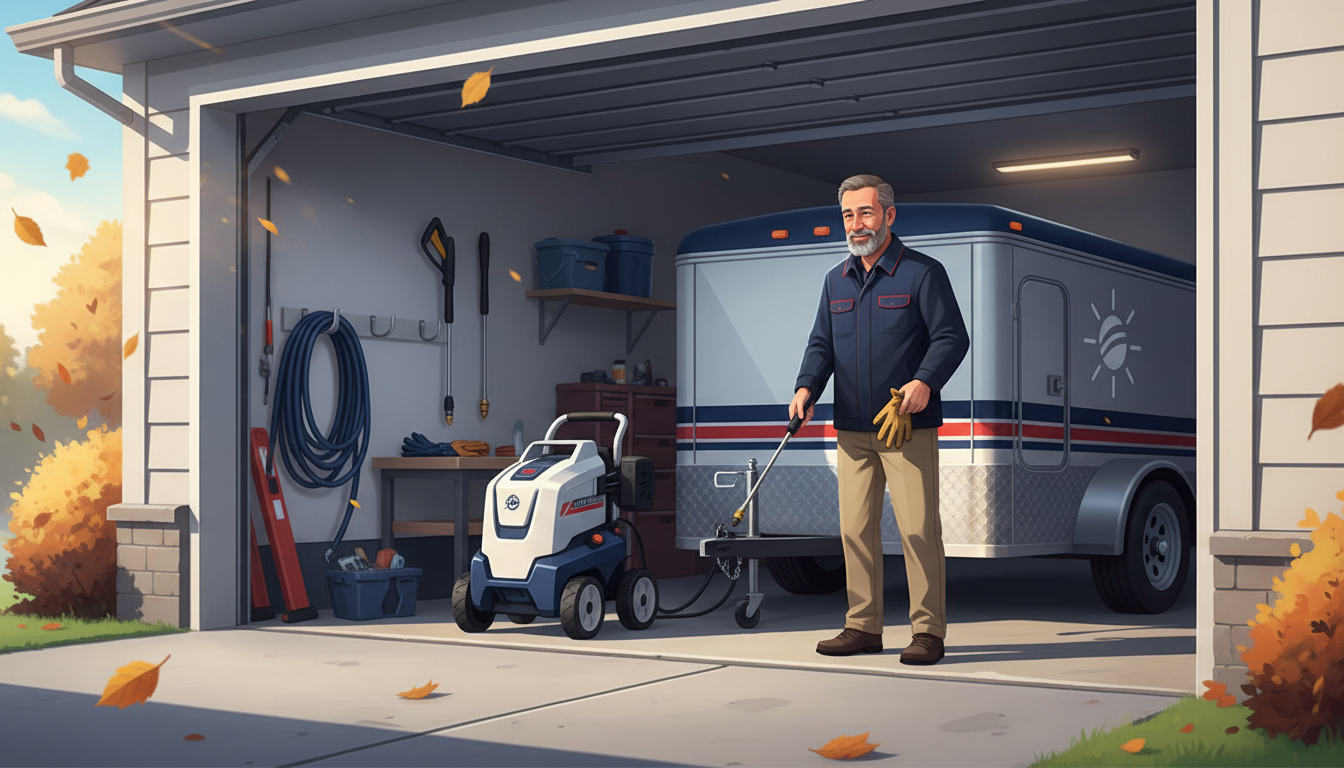
Fall is a smart time to get exterior-cleaning equipment ready for the colder months. A little careful planning can help protect a pressure washer in storage and help crews recognize when outdoor work conditions are becoming unsafe. Here’s a practical checklist for homeowners and cleaning professionals as we prepare for United We Shine’s planned full-service launch in Spring 2027.
1. Start with the equipment manual
Pressure washers differ by model, pump, engine, and power source. Before storing one, locate the owner’s manual and follow the maker’s directions for that exact machine. Simpson’s manufacturer guidance, published October 9, 2024, recommends consulting the manual and preparing the engine and pump according to the equipment maker’s instructions. That matters because trapped water can freeze and expand, potentially damaging pump components. Read Simpson’s storage guidance and check your own manual for the steps that apply.
2. Shut down and relieve pressure safely
When the manual says the machine is ready to shut down, turn it off and relieve pressure before disconnecting accessories. Simpson’s November 3, 2021 winterizing article describes turning the engine off, disconnecting and draining hoses, and squeezing the trigger to release remaining pressure. Treat that as manufacturer guidance for the equipment it covers—not a substitute for your own model’s instructions. See the dated Simpson winterizing article.
3. Protect the pump, engine, and accessories as directed
- Use a pump-protection product only if the manufacturer recommends it, and follow the product and machine directions.
- Follow the engine maker’s fuel and maintenance guidance, including whether fuel stabilizer is appropriate for your model and storage period.
- Inspect hoses, fittings, spray guns, and cords for wear or damage before putting them away.
- Store equipment clean and dry, in a location appropriate for its power source. Keep gasoline-powered equipment away from flames and use only well-ventilated storage areas.
Don’t assume one storage procedure or chemical is right for every washer. The manufacturer’s instructions should guide each step.
4. Take cold and wet conditions seriously
Exterior washing puts water on walkways, driveways, ladders, and other work areas. As temperatures approach freezing, that water can create slippery surfaces or ice. Plan around the forecast, keep people away from wet work zones, and postpone work when runoff may freeze or footing cannot be kept safe.
Cold-weather work can also become a health risk, especially when clothing or gloves stay wet. OSHA’s Cold Stress Guide recommends practical precautions such as staying dry, wearing appropriate layers, taking warm-up breaks, and monitoring workers for signs of cold stress. OSHA also provides winter-weather preparedness guidance for employers. Review the current guidance and adapt work plans to actual conditions.
5. Use the off-season to plan exterior care
Cold weather is a good time to note areas that may need attention when conditions are suitable: siding with visible buildup, roof areas that need a professional assessment, stained concrete, or windows that could benefit from a gentle cleaning approach. Different surfaces call for different methods. Avoid experimenting with high pressure on delicate materials, and ask a qualified professional about the process that fits the surface.
For roof work in particular, safety and weather conditions come first. A wet, icy, or windy roof is not a good place to rush a cleaning project. If you are unsure about safe access or the right cleaning method, leave the assessment to a professional.
A simple seasonal checklist
- Find the equipment manual and identify the washer model.
- Choose a dry, appropriate storage location before cold weather arrives.
- Follow the maker’s shutdown, pressure-relief, pump, and engine-storage instructions.
- Inspect accessories and note repairs needed before the next season.
- Check weather and surface conditions before any outdoor washing.
- Keep people clear of wet areas and stop if cold, wind, or footing makes the work unsafe.
Looking ahead to Spring 2027
At United We Shine, we’re getting ready to serve our community with exterior cleaning, including house siding and soft washing, roof care, concrete and driveway cleaning, fleet and truck washing, vehicle detailing, and window washing. Our full-service launch is planned for Spring 2027, and online booking is coming soon. Until then, you can visit our estimate and contact form to leave a message or get started.
Thanks for following along as we prepare. A careful start to the season begins with good planning, the right instructions, and safety at every step.
— Robert E. Allen Jr.
Sources
- Simpson Cleaning, “Winterizing Your Pressure Washer Engine: Short & Long Term Storage,” published October 9, 2024: manufacturer storage guidance.
- Simpson Cleaning, “Winterizing Your Pressure Washer,” published November 3, 2021: manufacturer winterizing guidance.
- U.S. Occupational Safety and Health Administration, Cold Stress Guide and Winter Weather Preparedness.
Leave a Reply