A clean exterior can make a home or business feel cared for, but good cleaning is about more than turning up the pressure. Different materials respond to different methods. As we prepare to serve Muskogee in Spring 2027, here’s how we think about matching the cleaning approach to the surface.
I’m Robert E. Allen Jr., co-owner of United We Shine Wash Company with Steve Stacks. Our goal is simple: understand what needs cleaning, choose a careful method, and treat the property with respect. These basics can also help you ask better questions when comparing exterior-cleaning services.
There isn’t one setting for every surface
Concrete, painted trim, vinyl siding, roofing, glass, and vehicle finishes are not interchangeable. A sound plan starts with the material and its condition, not with a pressure-washer setting. Before work begins, a cleaner should look for loose paint, cracked mortar, damaged seals, fragile landscaping, electrical hazards, and places where rinse water could run.
That assessment helps determine whether a job calls for a low-pressure rinse, a soft-wash approach, a brush and purified water, a surface-cleaning tool, or another method. It also gives the property owner a chance to point out known concerns before equipment is started.
Siding and building exteriors: clean with the material in mind
Exterior walls often include multiple materials and details: siding, trim, lights, vents, window seals, and landscaping. A careful wash plan accounts for all of them. Lower-pressure techniques may be appropriate for many siding jobs, while the cleaner still needs to control spray direction and protect openings and nearby plants.
Ask how the contractor plans to handle delicate areas and what preparation is needed. If a section is already loose, cracked, or failing, cleaning may reveal the existing condition rather than repair it. A clear conversation up front helps set realistic expectations.
Roof washing: start with roof type and condition
A roof should never be treated like a concrete driveway. Roofing materials, age, pitch, access, and visible buildup all matter. A contractor should identify the roof type and explain the proposed approach before starting. For suitable roofing materials, a soft-wash method may be considered; the right choice depends on the specific roof and site conditions.
Be cautious of anyone who promises the same aggressive process for every roof. Ask how they’ll manage runoff, protect plants, and work safely around edges, skylights, and other roof features. If access or conditions are unsafe, the job should be reassessed rather than rushed.
Window washing: purified water and a gentle touch
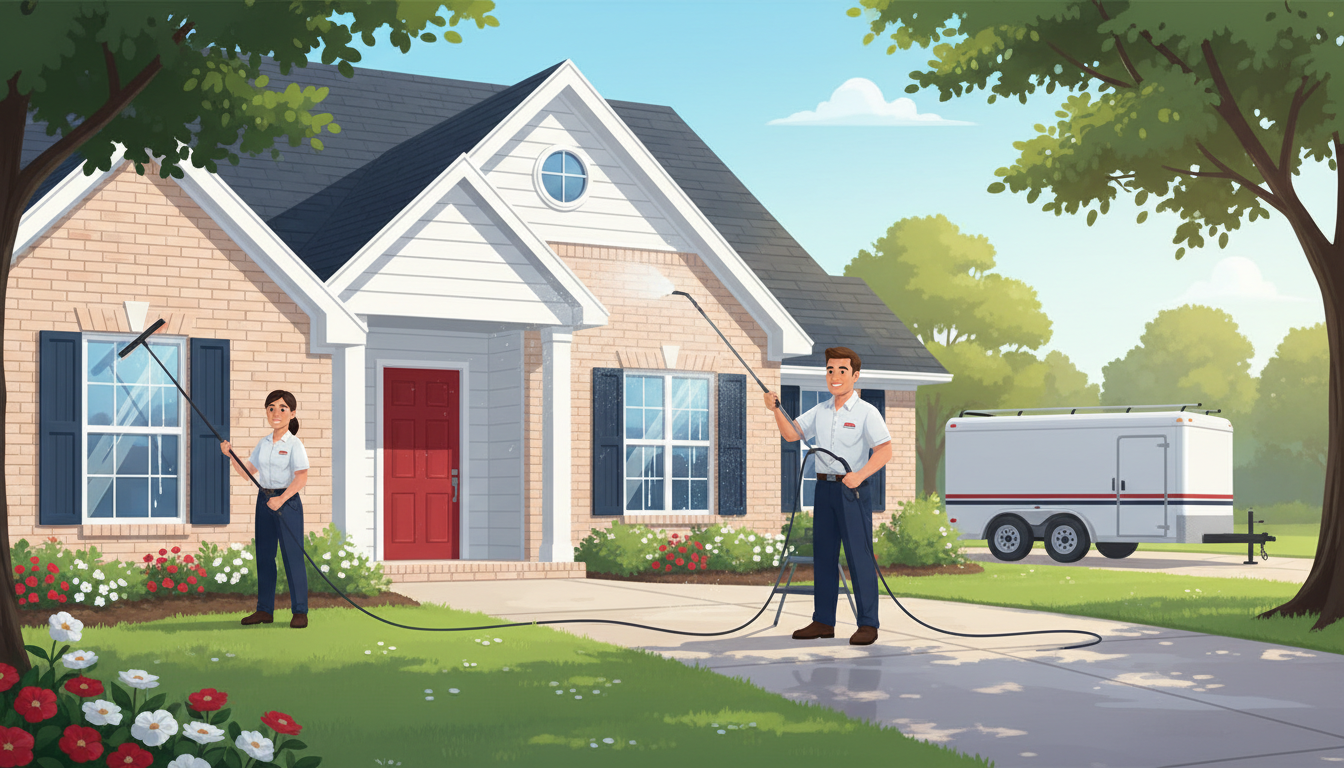
Glass needs a different approach from concrete. For our window-washing service, we use a Tucker reverse-osmosis water-filtration system with a water-fed pole and soft brush. The system filters the water used for rinsing, and the pole lets us clean suitable glass without directing a high-pressure jet at the pane. We’ll check the window, frame, screens, and access before recommending a method.
It’s a gentle, practical way to handle appropriate exterior windows while keeping the work focused on the glass and surrounding details. Tucker offers dedicated water-fed poles and RO/DI purification systems; the exact setup used on a job depends on the window and site.
Concrete: pay attention to condition and runoff
Driveways, walks, and patios can collect dirt and organic buildup, but concrete can also have cracks, worn areas, coatings, or previous repairs. A professional should inspect the surface, choose an appropriate technique, and consider where water will travel. A small test area can help reveal how the surface responds before cleaning a larger section.
Runoff deserves attention. The U.S. Environmental Protection Agency’s vehicle-washing best-practice guide advises preventing untreated wash water from entering storm drains or surface waters and describes routing it to treatment, proper disposal, or a sanitary sewer when applicable. Requirements vary by site and local rules, so don’t assume a storm drain and sanitary sewer are the same thing.
Vehicles and fleets: plan the wash area
For cars, work trucks, trailers, and fleets, a good cleaning plan considers the finish, decals, equipment, leaks, and the location where water will drain. The EPA guide recommends designated wash areas and preventing untreated vehicle wash water from commingling with stormwater. On a commercial property, the facility’s drainage plan and site rules matter just as much as the equipment.
For a fleet, it also helps to decide which vehicles are included, where they can be staged, how access will be managed, and whether the schedule should minimize interruptions. A little coordination makes the service smoother for both the business and the crew.
Safety is part of the cleaning method
High-pressure water can injure people, damage surfaces, and make hoses difficult to control. OSHA’s high-pressure cleaning guidance identifies hazards from water streams, uncontrolled hoses, and equipment leaks, and calls for appropriate protective equipment and inspection of hoses and connections. For every job, keep bystanders away from the work area and follow the equipment manufacturer’s instructions.
- Inspect hoses, fittings, and equipment before use.
- Keep people, pets, vehicles, and open windows clear of the active work area.
- Use a method suited to the surface instead of defaulting to maximum pressure.
- Plan where rinse water will go before washing begins.
- Pause and reassess if the surface or conditions differ from what was expected.
Questions worth asking before you hire
- How will you choose the cleaning method for this material?
- What will you do to protect windows, trim, landscaping, and nearby property?
- Where will the wash water drain, and do site or local requirements apply?
- What conditions could change the result or the plan?
- How will the crew secure the work area and inspect its equipment?
Clear answers help you understand the scope before the work starts. A responsible cleaner should be comfortable explaining the plan in everyday language and adjusting it when the surface calls for care.
Getting ready for Spring 2027
United We Shine plans to be in full service in Spring 2027, offering mobile exterior cleaning for homes, windows, roofs, vehicles, fleets, and suitable concrete surfaces in Muskogee and nearby communities. Online booking is coming soon. Until then, you can use our Get Started & Online Forms page to tell us what you’d like cleaned.
We’re excited to bring a careful, surface-aware approach to the community. From Grime to Shine—Every Time.
— Robert E. Allen Jr.
Co-owner, United We Shine Wash Company
Leave a Reply